Keeping Smiles During the Morning Rush: Coffee Shop Queue Tips
At 7:52 on a Tuesday, the door opens and does not stop opening. Six people, then nine. One has a train in twelve minutes. Another just wants to know whether the flat white is coming or whether they should cut their losses and go to work thirsty. The coffee will be fine. The queue is where the morning is won or lost.
A line moves better when the people in it know what is happening. That is the whole trick, and it costs almost nothing: greet the room, make order-ahead genuinely faster, and tell people the truth about the wait.
Greet the room, not just the next person
The customer at the till is the easy one. The person fourth in line is the one deciding whether to stay. Make contact with them, even in passing — a nod, a quick "morning, I'll be with you in about five minutes," eye contact over the shoulder of whoever is paying.
It sounds like a small thing. It isn't. Being acknowledged and being ignored are different experiences, and people forgive a long wait far more easily than they forgive being invisible. A busy barista who looks up and says "you're next after this one" buys two minutes of patience for free.
If someone is clearly rushing, say so plainly: "If you need to catch the 8:04, order now and I'll pour yours first." Most people will not take the offer. All of them will appreciate that someone noticed.
Make order-ahead genuinely faster
Order-ahead stops working the moment pick-up drinks join the same queue as walk-ins. Regulars try it twice, watch their cup sit behind six others, and quietly go back to standing in line. You have added a channel without adding speed.
Give the pick-up its own shelf and its own view
A labelled shelf, sorted by first name and pick-up time, within arm's reach of the door. Not behind the till, not on the bar where the milk jugs live. The customer should be able to grab and go without needing to interrupt anyone.
Keep the promise window honest
If the app says eight minutes and the drink arrives in fifteen, the customer stops trusting the number. A slightly longer window that you beat is worth more than a short one you miss. Set the estimate for the middle of the rush, not for a quiet Wednesday.
Protect the walk-in line
When ahead-orders pile up, the line at the till stalls — and the line at the till is what most of your customers actually see. During the worst stretch of the morning, put one person on ahead-orders alone. If that isn't possible, pace what comes in. A simple "pick-up is running about ten minutes right now" at the door saves a lot of unhappy tapping.
Say the wait in plain words
"Four ahead of you" tells a customer nothing. Those four could be two espressos or four drinks with a list of modifications. A time estimate is something a person can plan around.
Give minutes, not headcounts
"About six minutes" is useful. "About six minutes, and if you're in a hurry I'd take the batch brew" is better.
Update before they ask
The first update is expected. The second one is what builds goodwill: catch their eye halfway through and say "yours is up next." If something slips, say so early — "the grinder jammed, you're about three minutes out" — because a delay explained is just a delay, while a delay discovered feels like being misled.
Never invent a number to calm someone down. Understate slightly and deliver. That habit is worth more than any loyalty card.
Shape the space so the line can breathe
Most queue problems are layout problems wearing a customer-service costume. A few changes that routinely help:
- Mark the line with something physical — a mat, a low rail, floor tape in the shop's colour — so newcomers know where it starts.
- Make the menu readable from the back of the line, not just the front.
- Put grab-and-go pastries and snacks where the queue already passes, not behind the till.
- Move milk, sugar and lids away from the till so people who have finished paying stop blocking people who haven't.
- Angle the till so a customer steps sideways after paying rather than backing into the next person.
- Sign the pick-up counter clearly and keep it clear of everything else.
Staff the rush by role, not by position
During the rush, a café needs four jobs covered rather than four people standing at fixed posts: one on the till, one on bar, one running and greeting, one on ahead-orders. Swap people between till and bar partway through, partly to keep hands moving and partly because the till is where the pressure lands.
The real work happens in the fifteen minutes before the wave. Batch brew ready, cups and lids stocked at both ends of the bar, milk jugs filled, pastries out, the second grinder dialled in. Fifteen minutes of preparation buys an hour of calm.
The two-minute reset
Every lull, no matter how short: wipe the counter, restock lids, clear the pick-up shelf, check the pastry case. Small resets prevent small stalls, and small stalls are what turn a six-minute wait into a twelve-minute one.
Keep the mood steady when it slips
Apologise once, clearly, and then fix it. "Sorry about the wait, that one's on us" lands better than three mumbled sorries spread across five minutes, which mostly communicate that nobody is in charge.
If someone gets sharp, lower your voice instead of raising it, move them a step to the side of the line, and solve the specific problem in front of you. A glass of water while they wait costs nothing and quietly resets the temperature of the whole room.
Pick two fixes for tomorrow morning
Don't rewrite the whole operation on a Monday. Choose one language fix and one physical fix: give times instead of headcounts, and clear a proper pick-up shelf. Run it for a week. Watch which moment in the rush still feels worst, then change that one thing next.
Ask the people on bar where the queue breaks. They see it from the inside every day, and their answer is usually right. A calm morning isn't only about being faster. It's about being legible: people know where to stand, what to expect, and that someone has seen them. That is usually enough to keep them smiling while they wait.
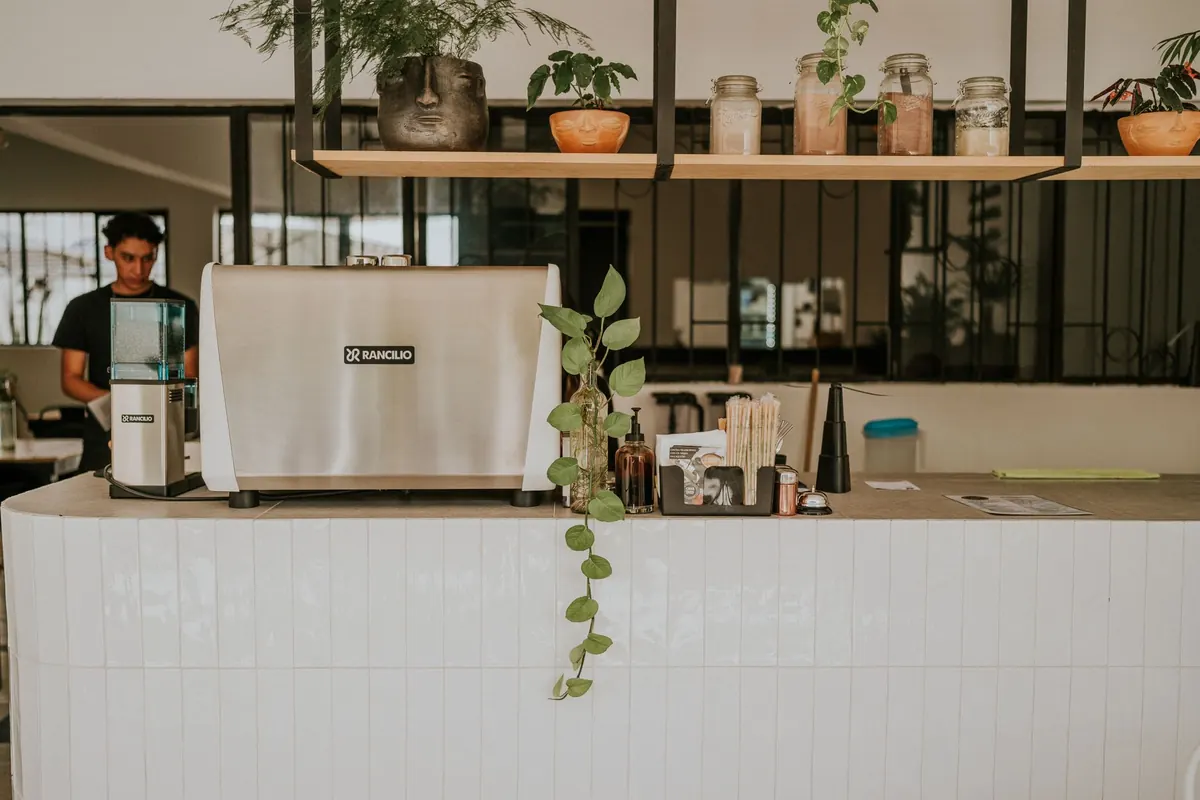
Photo: Amar Preciado / Pexels